
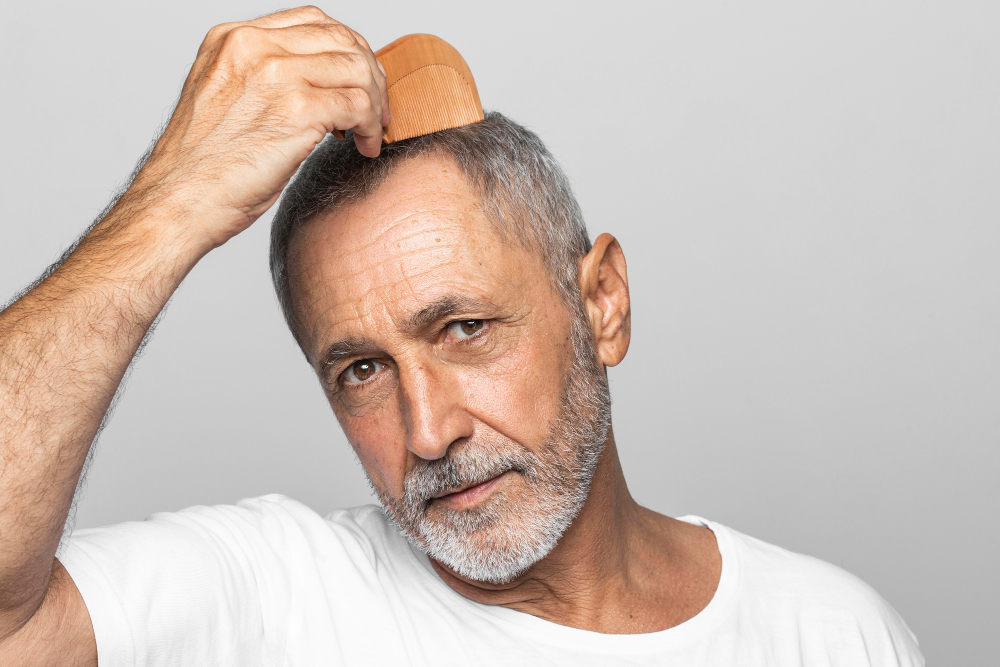
As people age, many may face challenges related to hair loss and the appearance of gray hair, which affects their overall appearance and self-confidence. Hair transplantation offers an effective solution to restore hair density, even for gray hair. Through modern and advanced techniques, doctors can restore vitality and youth to your appearance with natural and satisfactory results, while maintaining the overall health of the scalp and hair. Below, we review how to properly plan for gray hair transplantation and the key points to consider to ensure the best results.
Gray hair transplantation can be just as effective as regular hair transplantation, but there are some important points to pay attention to:
- Pre-assessment: It is very important to undergo a thorough assessment with a hair transplant specialist before the procedure to determine the quality and density of the donor area. Gray hair may be less dense or thinner due to age, which can affect the possible outcomes.
- Choosing the Right Doctor: Make sure to choose a doctor with experience in hair transplantation for similar cases. Gray hair may require special techniques during extraction and implantation due to its different characteristics.
- Transplantation Techniques: Gray hair can be harder to see during the procedure, so surgeons may use special tools or temporary coloring techniques to improve visibility and accuracy during implantation.
- Realistic Expectations: It is important to have realistic expectations regarding the results. Gray hair may not cover the scalp with the same density as dark hair and may be more noticeable in some areas.
- Post-transplant Care: Following the doctor’s instructions after the procedure is very important to ensure the best results. Aftercare may include taking certain medications, using special shampoo, and avoiding direct sun exposure.
- Maintenance: Since gray hair reflects the natural aging of hair, natural shedding may continue even after transplantation. You may need follow-up sessions to maintain hair density.
Hair transplantation requires planning and continuous care, so it is essential to start with a comprehensive discussion with a specialized doctor to ensure the best possible results.